
Three Blocks, One Big Vision: What’s Coming to Utica’s Nexus Neighborhood
The Wynn Hospital opened downtown. Harbor Point opened on the waterfront. The Utica University Nexus Center is already drawing athletes, families, tournaments, and visitors to the city.
And now, three city blocks between those major investments are being designed for what comes next.
Welcome to the Nexus Neighborhood.
It is one of Utica’s most ambitious downtown development pipelines, connecting pieces of the city that have been building momentum for years: healthcare, sports tourism, hospitality, housing, dining, events, and the waterfront.
Or, put another way: Utica is starting to connect the dots.
What Is the Nexus Neighborhood?
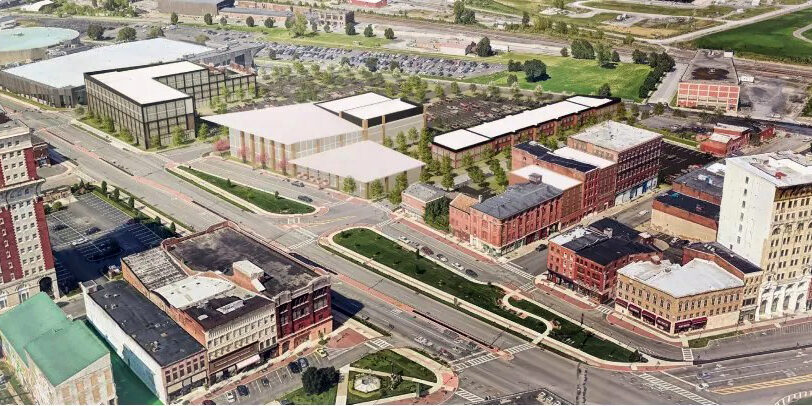
The Nexus Neighborhood is a proposed downtown development district near the Utica University Nexus Center, stretching across three city blocks and linking the city’s growing sports, medical, residential, and waterfront corridors.
The project is expected to include a hotel, housing, retail, office space, pedestrian connections, and additional development designed to support the activity already happening around the Nexus Center, Adirondack Bank Center, Wynn Hospital, Bagg’s Square, and Harbor Point.
This is not one building.
It is a neighborhood strategy.
And that distinction matters.
For years, downtown development in smaller cities often happened in isolated pieces. One project here. One building there. A ribbon cutting, a photo, a few speeches, and then everyone went back to asking where to park.
The Nexus Neighborhood is different because it is about connection. It is about taking the activity already happening downtown and building the surrounding infrastructure to support it.
Why This Location Matters
The location is the story.
The Nexus Neighborhood sits near some of Utica’s most important recent investments.
The Wynn Hospital opened in downtown Utica in 2023, bringing a major healthcare anchor into the city’s core. The Utica University Nexus Center opened as a 170,000-square-foot sports and recreation facility designed to host hockey, lacrosse, soccer, tournaments, and other events. The Adirondack Bank Center continues to bring hockey, concerts, and major community gatherings downtown. Harbor Point opened along Utica’s waterfront in 2025, creating a new public destination near the Mohawk River and Erie Canalway Trail.
Now, the blocks between these anchors are being looked at not as leftover space, but as opportunity.
That is how real downtown momentum works.
A hospital brings healthcare workers, patients, families, and visitors. A sports complex brings tournaments, athletes, parents, and hotel demand. A waterfront brings recreation, events, and quality-of-life value. Restaurants, coffee shops, housing, retail, and hotels grow stronger when they are connected to each other.
The Nexus Neighborhood is the connective tissue.
What’s Planned?
Plans for the Nexus Neighborhood include a hotel, new residential units, retail space, office space, pedestrian improvements, and additional development tied to the Nexus Center and the surrounding downtown district.
One key piece of the vision includes Bagg’s Hotel, a nod to one of Utica’s most historic names and locations. The area around Bagg’s Square has long been one of the city’s most interesting districts, with old buildings, restaurants, coffee shops, creative businesses, and access to Union Station.
Bringing new hotel capacity into that area makes sense.
Sports tournaments need rooms. Hospital visitors need rooms. Business travelers need rooms. Downtown events need rooms. And, honestly, if Utica wants to keep growing as a visitor destination, “good luck, try somewhere by the Thruway” cannot be the long-term hospitality strategy.
The project also includes housing and retail, which are just as important.
Downtowns do not become vibrant because people visit once. They become vibrant because people live there, work there, walk there, grab coffee there, meet friends there, and decide that being downtown is part of their normal week.
Why Prospective Residents Should Care
If you are considering a move to Utica, this is the kind of project worth paying attention to.
Not because every rendering becomes reality exactly as drawn. We have all seen enough development renderings to know they should come with a tiny disclaimer: “Final product may not include perfect sunsets, suspiciously attractive pedestrians, or one perfectly placed golden retriever.”
But the direction matters.
The Nexus Neighborhood signals that downtown Utica is not standing still. It is adding housing, hospitality, pedestrian connections, and mixed-use development around existing anchors.
That is exactly the kind of urban development prospective residents look for when evaluating a place to live.
Remote workers want more than affordability. Professionals want more than a short commute. Families want more than a lower mortgage. People want a community that feels alive, connected, and invested in its own future.
Utica is building that case.
Downtown Utica Is Becoming More Connected
Downtown Utica already has major pieces in place.
The Stanley Theatre brings national acts, Broadway shows, concerts, and cultural events. Munson adds art, film, classes, and exhibitions. The Adirondack Bank Center and Nexus Center bring sports and entertainment. Genesee Street, Bagg’s Square, Varick Street, and nearby neighborhoods continue to add restaurants, coffee shops, breweries, apartments, small businesses, and creative energy.
The challenge has always been connection.
How do you make downtown feel less like a handful of separate destinations and more like one walkable, active district?
The Nexus Neighborhood is part of that answer.
It gives Utica a chance to create a stronger link between the hospital, the sports and entertainment district, Bagg’s Square, Harbor Point, and the rest of downtown.
That is a big deal.
A Sign of Confidence in Utica
The Nexus Neighborhood was included as a key piece of the Mohawk Valley Regional Economic Development Council’s successful ACHIEVE funding application to New York State. That gives the project regional alignment and state-level backing, which matters for a development of this scale.
There is still work ahead. Details will evolve. Timelines will shift. Some pieces may move faster than others.
That is normal.
But the larger point is clear: Utica is not just fixing up one building at a time anymore. It is planning districts. It is connecting anchors. It is thinking about how people move, stay, work, visit, and live downtown.
That is how a city changes.
Why This Moment Matters
Cities that have major anchors and are still building around them are cities worth watching.
Utica has the Wynn Hospital. It has the Nexus Center. It has the Stanley Theatre. It has Munson. It has Harbor Point. It has the Adirondack Bank Center. It has Union Station. It has restaurants, coffee shops, breweries, historic buildings, and a growing sense that the next chapter is not theoretical anymore.
The Nexus Neighborhood is part of that next chapter.
For prospective residents, remote workers, young professionals, healthcare workers, entrepreneurs, and people who have not looked seriously at Utica in a while, this is the kind of project that should put the city back on the list.
Because downtown Utica is not just adding buildings.
It is building a neighborhood.